Mastering Private Customer Replies for Better Service
In my years working with customer feedback systems, I have seen how easy it is to overlook the quietest voices. While public reviews and social media mentions get most of the attention, private customer replies often contain the rawest, most honest insights. These are the messages people send directly through your app, email support, or feedback widget. They are not for public consumption, which means the customer feels free to say exactly what they think. The challenge is that these messages pile up quickly, and without the right approach, they become a noise that drowns out the signal.
The first time I saw a team try to manage private customer replies manually, they had a shared spreadsheet with color codes for urgency. It worked for about two weeks. Then the spreadsheet grew to fifty rows a day, and the color codes started to blur. People missed follow-ups, duplicate entries appeared, and the most critical feedback got buried under newer messages. That is when I realized that private customer replies need a system, not just a tool. They need a way to organize, summarize, and prioritize the messages so that every reply is meaningful and every operational improvement is tracked.
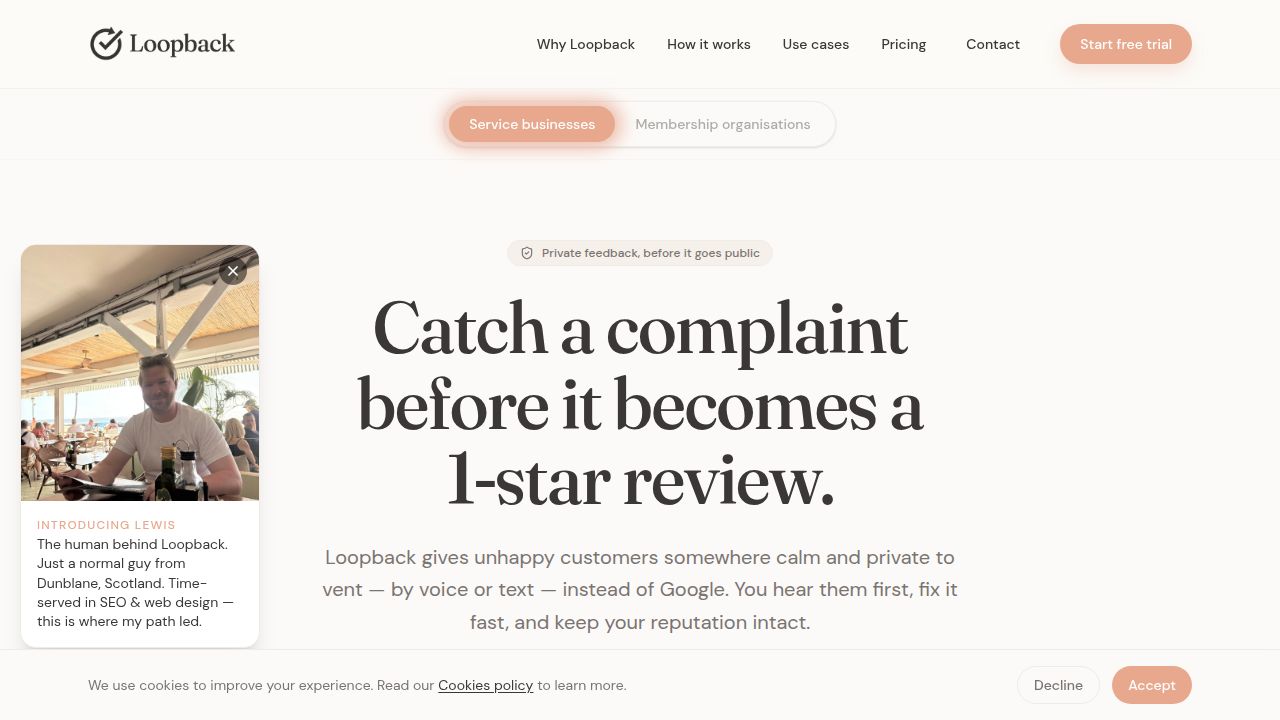
A good feedback management platform like Loopback transforms how you handle private customer replies Loopback uses AI to sort incoming messages, group similar ones together, and highlight the topics that come up most often. This does not replace the human touch. Instead, it gives your team more time to write thoughtful, personal responses. When you are not spending hours tagging and sorting, you can focus on the actual conversation. The result is faster resolution times and a better experience for the customer.
One practical example comes from a SaaS company I worked with. They received about two hundred private customer replies per week through their in-app feedback form. Before using a structured approach, their support team would read each message, assign it to a department manually, and then reply based on general templates. The problem was that the same issue would get reported by multiple customers, but the team would handle each one in isolation. They never aggregated the feedback to see the bigger picture. After they started using a system that grouped similar messages, they realized that a single bug in their billing flow was causing sixty percent of the complaints. They fixed it in one sprint, and the volume of related private customer replies dropped to almost zero.
That is the real power of managing private customer replies well. It shifts your team from reactive firefighting to proactive improvement. Instead of answering each message as if it is a standalone event, you start to see patterns. The customer who writes a long email about a confusing checkout process is not just asking for help. They are giving you a roadmap to reduce friction. The user who sends a short note about a missing feature is not just requesting something. They are telling you what your competitors might already offer.
Of course, there is a trade-off. The more you automate the sorting and prioritizing, the more careful you have to be about preserving the personal nature of the reply. Customers can tell when a response is generic. The goal is to use the system to handle the administrative overhead, not to script the conversation. A good rule of thumb is that the AI should do the heavy lifting on the backend, but the human should write the actual reply. That way, the customer feels heard, not processed.
Another aspect that often gets overlooked is the tracking side. When you reply to a private customer reply, you need to know whether the issue was resolved, whether the customer was satisfied, and whether the same problem will come up again. Without a feedback loop, you are just sending messages into a void. A platform that tracks these outcomes gives you data on what is working and what is not. Over time, you can see which types of replies lead to higher satisfaction and which issues keep resurfacing. This is where the operational improvements start to compound.
I have seen teams reduce their average reply time by forty percent just by prioritizing messages based on urgency and sentiment. The key is to have a system that can detect when a customer is frustrated versus when they are simply asking a question. A frustrated customer needs a faster, more empathetic response. A simple question can wait a bit longer. Without that prioritization, the urgent messages get lost in the middle of the pile, and the customer feels ignored just when they need you most.
Let me give you a more concrete picture. Imagine you run an online store and a customer sends a private message saying their order never arrived. That is a high-priority issue. It needs immediate attention and a refund or replacement. Now imagine another customer writes to ask about your return policy. That is important too, but it can wait a few hours. A good system will flag the first message as urgent and route it to the right person. The second message goes to a general queue. Without that distinction, the first customer might wait two days for a reply, and by then they have already left a bad public review.
When you combine private customer replies with a feedback management platform like Loopback, you get more than just better response times. You get a continuous improvement cycle. The same data that helps you reply faster also helps your product team decide what to build next. The customer who reports a bug is not just getting a fix. They are contributing to the stability of the product for everyone else. That is a powerful narrative to share internally, and it helps keep the whole company aligned around the customer experience.
One more thing: do not underestimate the value of closing the loop. When you reply to a customer, make sure to follow up after the issue is resolved. Ask if everything is okay now. That simple step turns a one-time interaction into a relationship. Customers remember the companies that cared enough to check back. And those follow-up conversations often generate even more useful private customer replies Loopback can help you track these follow-ups and remind your team when a customer is due for a check-in. It keeps the human element alive without adding more manual work.
In the end, handling private customer replies well is not just about efficiency. It is about respect. Respect for the customer's time and honesty. They took a moment to tell you something important. The least you can do is make sure their message lands in the right hands and gets a thoughtful, timely response. With the right system, you can do that consistently, even as your volume grows. And that consistency is what builds trust, reduces churn, and turns feedback into fuel for better products.